


Popsicle Stack
4.4914.00 Reviews
App Specs
- Version
- 2.7.9
- Updated On
- License
- Free
- Downloads
- 10,000,000+
- Developer
- Lion Studios
- Categories
- Arcade
- Platform
- Android, iOS
Screenshots


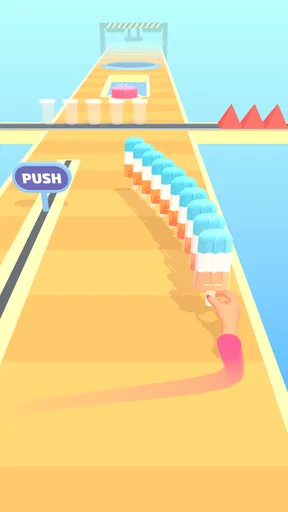
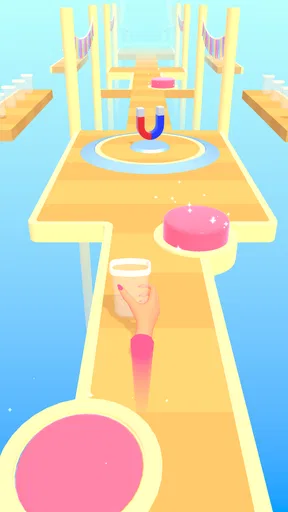


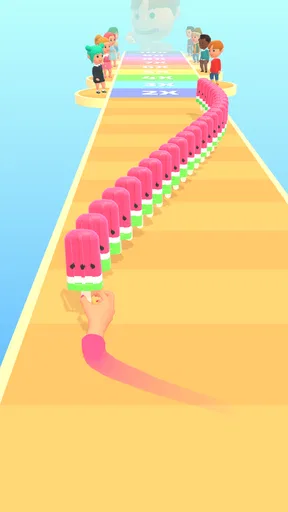

 Analysis by AppCompare
I picked up Popsicle Stack expecting a quick arcade distraction, and that is exactly where it works best. The idea is easy to understand almost immediately: guide a growing line of popsicles through a short course, collect what you can, and try to finish with a more satisfying stack than the one you started with. It is bright, simple, and built around the kind of small reward that makes sense when I only have a minute to spare.
That simplicity is both its strongest quality and its biggest limitation. I never needed a tutorial-heavy introduction or a long explanation before playing. At the same time, anyone looking for deep strategy, a story, or a demanding skill challenge will probably find the experience too light. Lion Studios has positioned this as a free arcade game for quick entertainment, and my experience matched that purpose closely.
The game is free to download, rated for Everyone, and has reached over ten million installs. Its average rating sits at 4.4 from around 179 thousand ratings, which gives a useful sense of its broad appeal without changing what the game actually is: a casual, touch-friendly diversion rather than a long-term competitive hobby.
How the short-session rhythm feels
In a short arcade game, I find the rhythm matters as much as the controls: a run should feel complete even when I have only a little time. Here, I can use each attempt to notice one choice that worked or one that cost me part of the stack, rather than treating every round as a race to keep playing. That makes it easier to settle into a repeatable approach, which is useful when I return after a break.
A clear action from the first attempt
The first thing I noticed was how little effort it takes to begin. The central action is readable on the screen, and the goal is presented through movement and collection rather than complicated menus. That matters when I am opening a game while waiting for a drink, sitting on public transport, or taking a short break between tasks. I can understand what I am doing before I have invested any attention in the game.
The popsicle theme also gives the action an immediate visual identity. The stack gradually becomes the object I care about, so each successful pickup feels connected to the result I am trying to protect. It is not a complex progression system, but it gives the run a visible purpose. I am not simply moving an anonymous shape through obstacles; I am trying to carry a better-looking, larger collection to the finish.
That clarity makes the game approachable for younger players and for anyone who does not normally spend time with arcade titles. The Everyone rating fits the accessible presentation. I would still recommend that parents check the usual device and purchase settings before handing over a phone, because the game includes optional in-app purchases ranging from $0.99 to $7.99 per item.
Worth Reading Before You Choose

Flipboard Shows What News Apps Must Do Beyond the Feed

Switching to Android Auto Means Rethinking Your Driving Routine

Google Calendar Makes a Crowded Week Easier to Manage

Ludo King Makes the Most of the Minutes Between Plans

Baby Panda World Brings Quick Play to Modern Phones, but Its Game Library Feels Busy

ESPN’s Live Game View Makes Following Close Games Easier
Good for a few minutes, not a full evening
A typical session feels naturally divided into short attempts. I can play one round, put the phone down, and return later without feeling that I have abandoned a complicated plan. This is where the game succeeds more convincingly than many casual alternatives that begin quickly but then demand long uninterrupted stretches.
The immediate pleasure comes from the combination of movement, collecting, and seeing the stack develop. The feedback is easy to read, so a good run feels rewarding without requiring a scoreboard full of numbers or a detailed explanation of why I succeeded. When I make a mistake, the disappointment is usually small enough that trying again feels reasonable rather than exhausting.
For me, the best use case is a five-minute gap. If I have just enough time to check messages but do not want to get pulled into a social feed, this gives me a contained activity with a clear beginning and end. It is also suitable for someone who wants a relaxing arcade game rather than a reflex test that leaves them tense after every attempt.
Where attention still matters
Although the controls are easy to grasp, easy controls do not mean that every run is automatic. I still need to watch the route and make decisions about what to collect or avoid. The challenge is gentle, but it gives the short rounds enough structure to prevent the game from feeling like a passive animation.
One useful habit is to focus on the route immediately ahead instead of staring at the whole screen. Because the game is built around a moving stack, reacting to the next choice is usually more helpful than trying to plan far beyond what is visible. I found that this kept the experience calm and reduced careless swipes.
Another practical tip is to treat a run as a small experiment rather than automatically chasing the biggest possible stack. On one attempt I might prioritize a safer route, while on another I might accept more risk for a better finish. That approach gives the simple mechanics a little more variety and makes failure feel informative instead of random.
Returning after interruptions and repeated runs
When I come back after an interruption, I do not need to reconstruct a plan or remember a chain of earlier decisions; I can simply begin another run and focus on the route in front of me. I get more from repeating attempts when I change just one habit at a time, such as choosing a safer path before chasing a larger stack. That small reset keeps the game approachable while making its limits easier to judge.
A forgiving game for broken-up play
The strongest part of Popsicle Stack is its tolerance for interruption. This is not a game that asks me to remember a long quest, preserve a carefully built inventory, or return at a precise moment. If I need to stop because someone calls, a message arrives, or my bus reaches its stop, the cost of leaving is low.
That makes it more practical than many arcade games that rely on long survival sessions. I can fit it around ordinary life instead of arranging my time around it. The short-run format also means I do not feel pressured to continue just because I have already invested several minutes. When I am finished, I can close it without losing a meaningful story beat or a complicated chain of progress.
There is a trade-off here. People who want deep continuity may see the same simplicity as a weakness. The game is easy to put down because it does not create much obligation to return. I consider that a positive for casual use, but it means the experience depends heavily on whether the basic collecting loop remains enjoyable to you.
What happens when the novelty settles
After the first few attempts, the central loop becomes familiar. The surprise of seeing the stack grow naturally fades, and the game then has to rely on small improvements and the pleasure of a clean run. I enjoyed that for short bursts, but I would not pretend that the mechanics offer the same depth as a more demanding arcade game.
This is the main replay-value question: are you happy repeating a compact action because it feels pleasant, or do you need constant new systems to stay interested? If you enjoy polishing a simple performance, the game can remain useful as a casual time filler. If you need new characters, elaborate challenges, or a large strategic layer, the repetition will probably become noticeable quickly.
My best approach was to play in batches rather than forcing a long marathon. A few attempts during a break felt satisfying. Continuing far beyond that made the repeated structure more obvious. The game benefits from restraint; it is more enjoyable when I let it occupy a small part of my day instead of expecting it to become my main game.
How it compares with other arcade choices
Compared with a traditional endless runner, this feels less focused on maintaining a long streak and more focused on the visual result of each short course. That makes it easier to understand and less demanding for someone who dislikes constant high-speed reactions. On the other hand, an endless runner usually offers a stronger sense of mastery through timing, route learning, or score chasing.
Compared with puzzle arcade games, Popsicle Stack asks for less planning. I am not building a solution several moves ahead or managing a board full of possible combinations. The advantage is immediate accessibility; the disadvantage is that players who enjoy solving layered problems may find the decision-making too shallow.
It also differs from idle or management games because the pleasure comes from my direct input during the run. I am not waiting for resources to accumulate in the background. That makes it more engaging for a short active break, while an idle game may be better when I want something that requires almost no attention.
In other words, I would choose this when I want colorful, direct interaction with low commitment. I would choose a more complex arcade or puzzle title when I want a longer learning curve, a stronger sense of progression, or a reason to keep playing for an hour.
Small practical details that affect enjoyment
The current version is 2.7.8 and it requires Android 8.0 or later, so compatibility is straightforward for many modern devices. That is useful to know before downloading, especially if the game is intended for an older phone. The free entry point also makes it easy to test the basic loop without committing money first.
Optional purchases are the part I would approach carefully. Because the game is built around short attempts, I do not think spending is necessary to understand whether the core action suits you. I would play it normally first, decide whether the repetition remains enjoyable, and only then consider any purchase. For a child using a shared device, I would make sure purchase approval is enabled rather than assuming a free download means every part of the experience is free.
Another useful expectation is that the game is better suited to portrait-style, one-handed moments than to a dedicated gaming session. I found its appeal strongest when I could pick it up instantly and stop just as quickly. If I were sitting down with a controller or a tablet expecting a substantial game, the limited scope would be more apparent.
Who should try it, and who should skip it
I would recommend it to casual players who like collecting mechanics, bright presentation, and short rounds. It is a particularly good match for someone who wants an uncomplicated game to fill small gaps in the day without learning a large set of rules. It can also work for families looking for an approachable arcade title, provided an adult handles the device’s purchase controls.
I would skip it if my priority were deep replayability. Players who need evolving objectives, competitive multiplayer, detailed customization, or a substantial campaign will likely outgrow the core loop. I would also look elsewhere if I wanted a game that rewards long uninterrupted concentration, because this one is designed around quick satisfaction rather than extended immersion.
The most realistic scenario is simple: I have ten minutes before an appointment, I want something more active than scrolling, and I do not want to risk losing progress in a story game. A few runs fit that moment well. If the appointment is delayed, I can play a little longer; if I am called sooner, stopping does not create a problem.
My casual verdict
After spending time with it, I see Popsicle Stack as a pleasant snack-sized arcade game rather than a title I would build my entire gaming routine around. Its best qualities are immediate understanding, low interruption cost, and a visual reward that arrives quickly. Those qualities are not flashy, but they are exactly what makes it useful in everyday situations.
The limitations are equally clear. The basic loop can feel repetitive, and the game does not offer enough complexity for players who want a demanding challenge. Its replay value depends on whether repeating short collection runs is satisfying on its own. I found the experience more enjoyable in brief visits than in extended sessions, which is an important distinction before downloading.
Lion Studios has made a focused casual arcade game that knows how to start quickly. I like that it does not make me study instructions or commit to a long session, and I appreciate that a failed attempt rarely feels costly. Still, I would keep my expectations modest: this is a convenient time filler, not a deep progression game.
My final recommendation is simple: try it if you want immediate, interruption-friendly fun and enjoy watching a small collection grow through direct play. Keep it installed for spare minutes, not because it promises endless variety. For that narrow purpose, it does its job well; for a richer arcade experience, a more demanding alternative will be the better choice.
Pros
- Simple one-touch controls are easy to learn and play.
- Colorful visuals make the stacking action appealing.
- Short levels suit quick gaming sessions.
- Increasing difficulty keeps the gameplay engaging.
- Works well for casual players of different ages.
Cons
- Gameplay may feel repetitive after extended play.
- Precision can be frustrating when stacks become tall.
- Progression may lack depth for experienced players.
- Ads may interrupt the experience between levels.
- Limited variety can reduce long-term replay value.
FAQs for Popsicle Stack
What is Popsicle Stack and how is the gameplay structured?
Popsicle Stack is a casual stacking game focused on building colorful frozen-treat towers while progressing through short, level-based challenges. The controls are generally simple and designed for quick play sessions: you guide, collect, stack, or arrange items and try to create the required result without making mistakes. Its straightforward mechanics make it accessible, although later stages may require more careful timing and planning.
Is Popsicle Stack free to download and play?
Popsicle Stack can generally be downloaded for free, allowing players to try the main gameplay without paying in advance. However, free mobile games commonly include advertising, optional purchases, or both. Ads may appear between levels or during other moments, while purchases can sometimes provide bonuses or remove advertising. Check the store listing and in-app purchase details before downloading, especially on a child’s device.
Does Popsicle Stack require an internet connection?
The basic levels of Popsicle Stack may be playable without a constant internet connection, which makes it suitable for short sessions while traveling or when mobile data is unavailable. Nevertheless, some features—such as advertisements, updates, analytics, promotional content, or purchases—may depend on connectivity. Offline behavior can vary by version and device, so it is best to launch the game once online before relying on it offline.
Is Popsicle Stack suitable for children and younger players?
Popsicle Stack uses bright visuals and uncomplicated controls, so it can be appealing to children and casual players. Even so, parents should review the game’s age rating, advertising practices, privacy information, and available in-app purchases before allowing unsupervised play. If a child is using the app, parental controls and purchase restrictions are recommended, since free games may display third-party advertisements or encourage optional spending.
What should I check before downloading Popsicle Stack on Android or iOS?
Before installing Popsicle Stack, check that your phone or tablet meets the current operating-system requirements and has enough free storage for the app and future updates. It is also worth reviewing recent user ratings, the developer’s privacy policy, permissions, advertising details, and in-app purchase information. Downloading from the official Google Play Store or Apple App Store is the safest way to obtain the legitimate version.


